Financing Inground Pool Installation Projects Over $80K in Papillion, NE
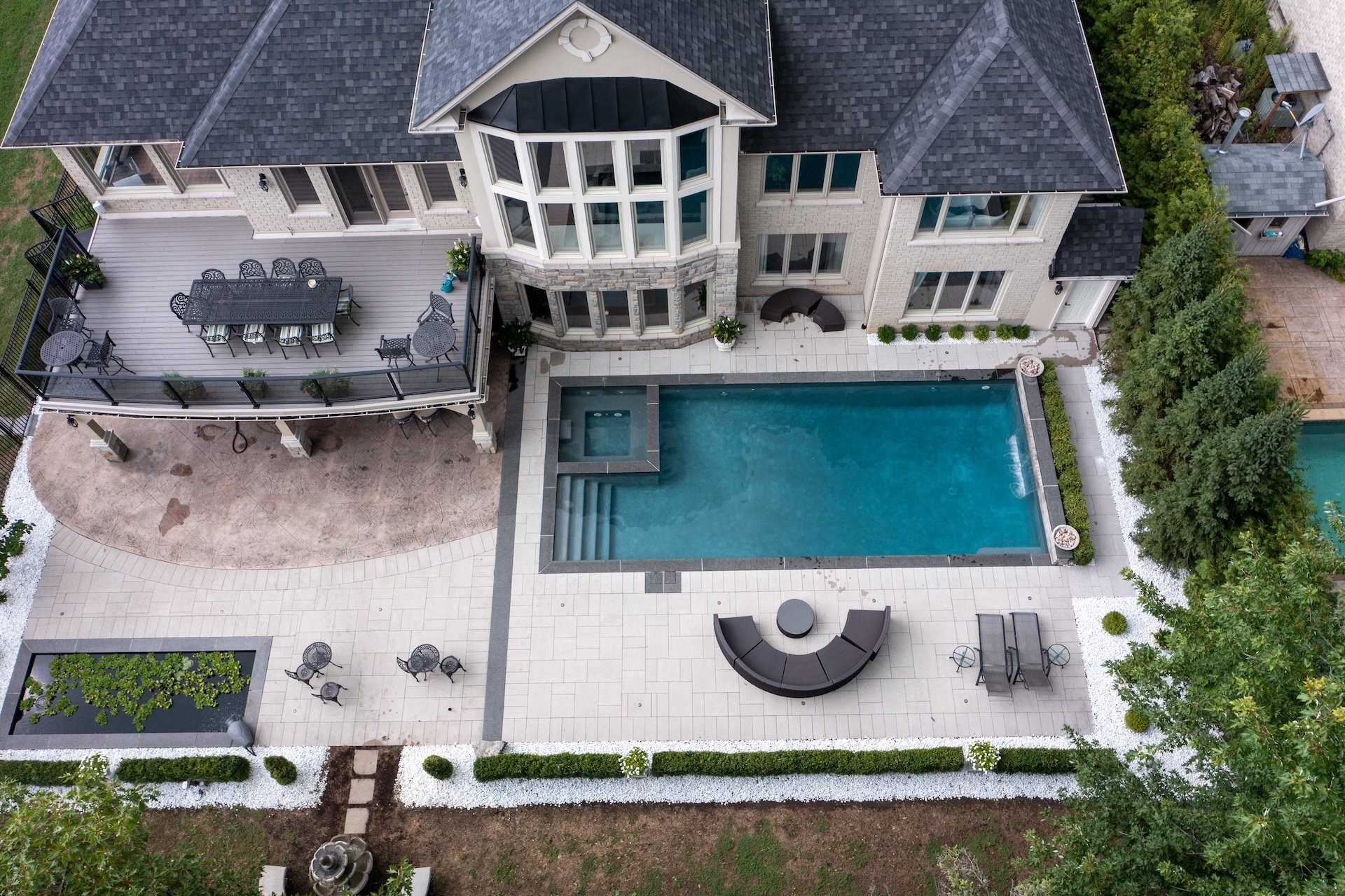
An inground pool installation in Papillion, NE that tops $80,000 usually means gunite construction, custom features, and a design built to last decades, which raises a practical question most homeowners face before signing a contract: how to actually pay for it.
Hardscape Contractors has installed pools and outdoor living spaces throughout the Papillion area, serving homeowners from Papillion to Omaha and the surrounding Nebraska communities, since 2008, and that experience includes walking clients through financing options as part of the planning process rather than leaving it as an afterthought once a design is finalized.
Papillion and the surrounding Omaha metro area have seen steady growth in backyard pool and outdoor living projects over the past several years, and that demand has pushed more homeowners to explore financing options they may not have considered for a home improvement project in the past.
Related: Omaha and Valley, NE's Choice: Transformative Inground Pool Designs for Every Backyard
What Financing Options Are Available for an $80K+ Inground Pool Installation?
A project at this investment level rarely gets paid for out of pocket in full, which means understanding the available financing paths, what drives the total cost, and how to prepare for the application process matters as much as choosing tile color or coping material.
Home Equity Loans and HELOCs
Home equity loans and home equity lines of credit remain some of the most common ways homeowners fund a project at this price point, since both use the home itself as collateral to secure a lower interest rate than an unsecured loan.
A home equity loan provides a lump sum upfront at a fixed rate, which suits a project with a firm, fully scoped budget agreed on before construction starts. A HELOC instead functions more like a credit line, letting a homeowner draw funds as construction costs come due rather than taking the full amount at once, which fits a phased project or one where change orders remain a real possibility.
Both options typically require sufficient equity built up in the home and a credit profile that qualifies for favorable terms, and the application process usually takes several weeks between appraisal, underwriting, and closing.
Homeowners planning a pool for a specific season should start that process early enough that financing is in place before a builder needs a deposit to begin design work.
Cash-Out Refinancing as Another Option
A cash-out refinance replaces an existing mortgage with a new, larger one, with the difference paid out to the homeowner in cash to fund the pool project.
This option can make sense when current mortgage rates are favorable compared to a homeowner's existing rate, but it resets the mortgage term and typically carries higher closing costs than a standalone home equity loan or HELOC, so it works best for homeowners already considering a refinance for other reasons.
Personal and Pool-Specific Loans
Personal loans and pool-specific financing programs offer an alternative for homeowners who prefer not to borrow against their home equity, whether because they want to avoid using the house as collateral or because they don't have enough equity built up to cover a project this size.
These loans typically carry higher interest rates than a home equity product, reflecting the lender's higher risk on an unsecured loan, but they close faster and don't require the same appraisal and underwriting process. That speed matters for a homeowner working on a tighter installation timeline or one who wants to avoid the paperwork associated with a home equity application.
Pool-specific lenders in particular structure their loan terms around the typical project timeline and cost range for pool construction, which can make the underwriting process more straightforward than a generic personal loan application where the lender has less familiarity with how the funds will be used.
In-House or Partner Financing Programs
Many pool builders, including Hardscape Contractors, partner with lenders who specialize in pool and outdoor living financing specifically, and those relationships can benefit homeowners in a few concrete ways.
A financing partner familiar with pool construction understands the draw schedule tied to excavation, gunite, plumbing, and finishing work, which means funds release on a timeline that matches actual construction progress rather than a generic disbursement schedule. That alignment reduces the chance of a homeowner needing to cover a gap between when a contractor bills for a phase and when loan funds become available.
Working through a builder's financing partner also often means a faster initial approval process, since the lender already has a working relationship with the contractor and a general sense of typical project costs in the region. Hardscape Contractors can connect homeowners with those lending partners as part of the initial consultation, well before a final design and cost estimate get locked in.
What Drives the Cost of an Inground Pool Installation Above $80,000?
Understanding what drives the cost up also helps homeowners choose financing that matches the actual scope of the project.
Gunite and Concrete Construction
An $80,000 inground pool typically reflects gunite or concrete construction rather than a fiberglass or vinyl liner shell, since gunite allows for custom shapes, integrated features, and a structure built to perform in Nebraska's freeze-thaw climate for decades.
That construction method costs more upfront than a prefabricated shell, both in materials and in the labor required for on-site forming and finishing, but it accounts for a significant share of the price difference between an entry-level pool and one in the $80,000-plus range. A gunite shell also allows for a custom shape and size suited to a specific lot, rather than the standard dimensions that come with a fiberglass shell delivered pre-formed.
Added Features and Outdoor Living Elements
Features like a tanning ledge, spa, water feature, or custom lighting package add cost individually, and a full outdoor living build that pairs the pool with a patio, fire feature, or outdoor kitchen pushes a project into this price range even on a moderately sized pool.
Hardscape Contractors walks homeowners through which features affect the budget most significantly during the design phase, so the final scope reflects an intentional choice rather than costs that accumulate without a clear picture of where the money goes. A spa attached to the main pool, for instance, adds plumbing, equipment, and finishing costs that a standalone pool doesn't require, while a simpler water feature like a sheer descent adds less to the total.
Decking and Patio Material Choices
The material selected for the pool deck, whether stamped concrete, pavers, or natural stone, affects the total project cost as much as any single pool feature, since decking often covers more square footage than the pool itself.
Hardscape Contractors prices decking options separately from the pool shell during the estimate process, so homeowners can see clearly how a material upgrade affects the overall budget and financing amount needed.
Site Conditions and Excavation
Site conditions specific to a property, including grade changes, soil type, and access for excavation equipment, also factor into the total cost of a pool project, sometimes as significantly as the features selected for the pool itself.
A sloped lot or a backyard with limited equipment access typically requires additional site work, retaining walls, extra excavation, or a modified equipment approach, that a flatter, more accessible lot doesn't need.
Hardscape Contractors accounts for those conditions during the initial site evaluation so the financing conversation reflects the property's actual requirements rather than a generic estimate that gets revised upward once construction reveals site-specific challenges.
Permits and Code Requirements
Papillion and the surrounding Sarpy County communities require permits for inground pool construction, and code requirements around fencing, setbacks, and electrical work for pool equipment add cost that homeowners sometimes overlook when budgeting from a builder's base quote.
Hardscape Contractors builds permit fees and code-required safety features into the initial cost estimate rather than treating them as a separate line item discovered mid-project.
How Does the Loan Amount Affect Monthly Payments and Terms?
Once a total project cost is established, the loan amount, term length, and interest rate together determine what a monthly payment actually looks like, and small differences in any of those three factors compound significantly over the life of a loan this size.
Term Length and Total Interest
A longer loan term reduces the monthly payment but increases the total interest paid over time, while a shorter term does the opposite, so the right choice depends on a homeowner's cash flow priorities as much as the total amount borrowed.
Homeowners comparing financing options should request an amortization schedule for each option under consideration, since a lower advertised rate on one loan product doesn't always translate to a lower total cost once term length and fees are factored in.
For example, a $30,000 loan at a fixed rate over ten years carries a meaningfully different monthly payment and total interest cost than the same amount financed over five years, even before accounting for differences in interest rate between loan products.
Running those numbers side by side, rather than focusing on the advertised rate alone, gives a homeowner a clearer picture of the actual cost of each financing path.
Fixed vs. Variable Rates
A fixed-rate loan offers payment predictability that many homeowners prefer for a large purchase like this, since the payment amount stays the same for the life of the loan regardless of broader interest rate movement.
A variable-rate product, more common with certain HELOCs, can start lower but carries the risk of increasing over time, which matters for a homeowner planning a monthly budget around a specific payment amount for the next several years.
Related: How Inground Pool & Pool Companies in Millard, NE, Support Comfortable Outdoor Use
What Should Homeowners Prepare Before Applying for Pool Financing?
Homeowners preparing to apply for pool financing benefit from gathering a few key pieces of information before starting the process, which shortens the timeline between application and approval.
Documentation and Cost Estimates
A recent home appraisal or an understanding of current home equity helps set realistic expectations for a home equity loan or HELOC, and most lenders will want documentation of income, existing debt, and credit history regardless of which financing path a homeowner pursues.
Having a firm cost estimate from the pool builder, rather than a rough range, also helps a lender evaluate the loan amount accurately and can speed up underwriting since less back-and-forth is needed to confirm the final project scope.
Credit Score and Timing
Credit score plays a significant role in the interest rate a homeowner qualifies for, particularly on unsecured personal loans and pool-specific financing where the loan isn't backed by home equity. Homeowners with time before they plan to break ground can benefit from reviewing their credit report and addressing any errors or high balances that might affect the rate they're offered.
Homeowners should also clarify with Hardscape Contractors what the payment schedule looks like relative to construction milestones before finalizing financing, since a loan structured around a lump-sum disbursement doesn't always align well with a builder's draw schedule tied to specific phases of construction.
Can a Pool Project Be Phased to Manage Financing and Budget?
Not every homeowner wants to, or can, finance the full $80,000-plus scope in a single loan, and phasing a project across more than one season is a legitimate way to manage both budget and financing.
Planning a Two-Phase Project
A homeowner might install the pool shell, decking, and basic equipment in the first phase, then add a spa, additional hardscape, or an outdoor kitchen in a second phase once the first loan is further along or paid down.
Hardscape Contractors designs the full footprint upfront even when construction happens in phases, so a second-phase addition doesn't look like an afterthought bolted onto the original pool.
Homeowners considering a phased approach should also discuss timing with Hardscape Contractors, since certain site work, excavation, plumbing rough-in, and electrical, is far more cost-effective to complete once rather than reopening a finished landscape a year or two later to add a second-phase feature.
Weighing the Tradeoffs of Phasing
Phasing does mean paying for two separate mobilizations and potentially two separate financing applications rather than one combined project, so homeowners considering this approach should weigh the added logistics against the benefit of spreading the financial commitment across a longer timeline.
Hardscape Contractors can walk through both a single-phase and multi-phase cost comparison during the design consultation so the tradeoff is clear before a homeowner commits to either path.
Build Your Pool With Hardscape Contractors
Financing a pool this size works best when it happens alongside the design process rather than after a final number is already set in stone, since Hardscape Contractors serves homeowners throughout the Papillion area and the surrounding Nebraska communities with both the design expertise and the lending relationships to make that conversation productive from the first meeting.
A pool built at this investment level performs and holds up for decades when it's built on the right foundation, and it gets easier to commit to when the financing plan fits how a homeowner actually wants to pay for it rather than being figured out after the fact.
Schedule an inground pool installation consultation with Hardscape Contractors and start planning a pool built for your Papillion-area property, with a design and financing conversation that happens together from the start.
Frequently Asked Questions
Does financing cover the initial deposit, or does that need to be paid separately?
Most financing options, including home equity loans, HELOCs, and pool-specific loans, can cover the initial deposit along with the rest of the project cost once the loan closes. The timing matters here, since a home equity loan or HELOC typically takes several weeks to close, so homeowners on a tight construction timeline should confirm financing is already in place before Hardscape Contractors requires a deposit to begin design work. Homeowners paying a deposit before financing closes should plan for that amount separately and factor it into the total loan request.
Can a homeowner combine more than one financing source for a single pool project?
Combining a home equity loan or HELOC with a smaller personal loan is a workable approach for homeowners who don't want to borrow the full project cost against their home equity alone. This split works best when the homeowner clearly separates which costs each loan covers, since managing two draw schedules and two sets of payment terms adds complexity compared to a single financing source. Hardscape Contractors can structure a project's cost estimate to make that kind of split financing easier to plan around from the start.
What happens if the project ends up costing more than the original financed amount?
Change orders during construction, whether from a feature added mid-project or an unexpected site condition, can push the final cost above the original estimate a homeowner financed for. A HELOC handles this situation more easily than a fixed lump-sum loan, since a homeowner can draw additional funds up to the credit limit rather than needing to secure a second loan. Homeowners financing with a fixed loan amount should build a reasonable contingency into the total they request rather than financing the bare minimum estimated cost.
Is interest paid on a home equity loan or HELOC for a pool project tax-deductible?
Tax treatment of home equity loan and HELOC interest depends on how the funds are used and current federal tax law, and a pool project's eligibility for that deduction is a question best confirmed with a tax professional rather than a landscape contractor. Homeowners considering this factor as part of their financing decision should have that conversation with an accountant before finalizing a loan product, since the answer affects the real cost comparison between financing options. Hardscape Contractors can provide project cost documentation a homeowner's accountant might need for that conversation, but doesn't offer tax advice directly.
Related: Experience the Ultimate in Outdoor Living With an Inground Pool in Gretna and Papillion, NE
About the Author
Since 2008, we have shared our passion for the great outdoors by creating award-winning landscapes that inspire our customers to spend more time outside. As a first-generation company, we’ve persevered through entrepreneurial challenges, put our strong Midwestern work ethic to good use, and got our hands and boots dirty to become what we are today—a successful business with four locations spanning across Colorado, Kansas, Nebraska, and Tennessee.